What Sets an Iron Foundry Apart? Strength, Durability, and Applications
February 21, 2026
How to Choose the Right Foundry Company for Your Manufacturing Needs
April 8, 2026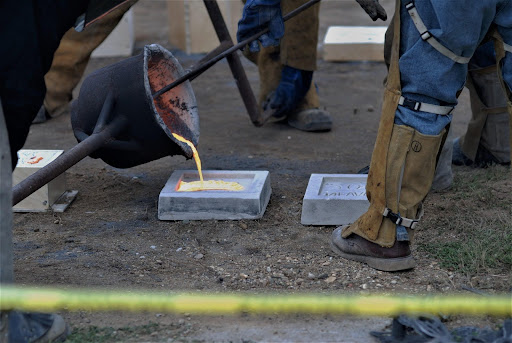
Iron has been one of the most widely used industrial materials for centuries. Even with advances in manufacturing and new engineered materials, iron castings remain a critical component in modern equipment, infrastructure, and heavy machinery. The iron casting process allows manufacturers to create durable, complex components that can withstand demanding operating conditions.
At G&W Foundry, iron casting is at the core of what we do. By combining proven casting techniques with modern process control, we produce cast components designed for long-term performance across a wide range of industries. Understanding iron casting production, the different types available, and common usages helps explain why this manufacturing method continues to play such an important role in industrial production.
What Is Iron Casting?
Iron casting is a manufacturing process in which we pour molten iron into molds to create specific shapes. Once the metal cools and solidifies, the result is a strong, durable component known as a casting.
The casting process allows manufacturers to produce parts with complex shapes that would be difficult or costly to create through machining or fabrication alone. We can often form features such as internal cavities, reinforced sections, and structural supports directly within the mold.
A modern iron casting operation uses carefully controlled processes to ensure the metal composition, cooling rate, and mold design all contribute to a reliable finished product. These controls help ensure each casting meets the mechanical and dimensional requirements of its intended application.
How the Iron Casting Process Works
While specific processes can vary between foundries, the core steps of iron casting follow a consistent sequence designed to ensure quality and repeatability.
Pattern and Mold Creation
The process begins with a pattern, which is a replica of the final component. Patterns create molds that form the cavity where we will pour the molten iron.
Most iron foundries use sand molds because they can withstand the high temperatures involved in the casting process. Mold design is a critical stage because it determines how the molten metal flows, how gases escape, and how the casting cools.
We incorporate proper gating systems, venting, and allowances for shrinkage into the mold design to maintain accuracy and reduce defects.
Melting the Iron
Once we prepare the molds, iron is melted in a furnace at extremely high temperatures. The exact temperature and process depend on the type of iron.
During melting, technicians carefully monitor the chemical composition of the metal. We may make adjustments to ensure the correct balance of elements such as carbon and silicon, which influence strength, hardness, and other performance characteristics.
Maintaining consistent chemistry during this stage is essential for producing high-quality iron castings.
Pouring and Solidification
When the molten iron reaches the correct temperature and composition, we pour it into the mold cavity.
As the metal fills the mold, it begins to cool and solidify into the shape defined by the pattern. Cooling must occur at a controlled rate to prevent internal stress, cracking, or distortion.
Once solidification is complete, the casting has taken on its final shape and structural properties.
Shakeout and Finishing
After cooling, we remove the mold material in a process called shakeout. We then clean the the raw casting and prepare it for finishing.
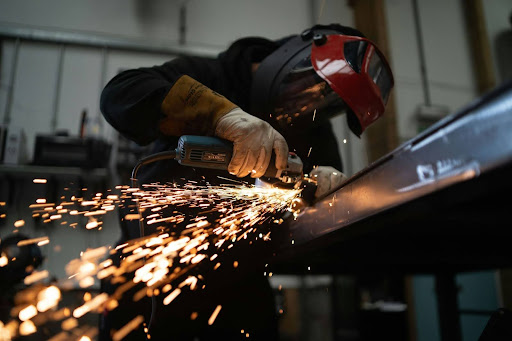
Finishing operations may include grinding, trimming excess metal, or machining critical surfaces to achieve precise tolerances. Some components require additional treatments depending on their intended use.
Common Types of Iron Castings
Not all iron castings are the same. Different types of cast iron offer unique properties that make them suitable for specific industrial applications.
Gray Iron Castings
Gray iron is one of the most widely used casting materials. It contains graphite flakes that give the material its distinctive gray appearance when fractured.
This type of iron casting offers excellent vibration damping and good machinability, making it ideal for components such as machine bases, engine blocks, and pump housings.
Ductile Iron Castings
Ductile iron, also known as nodular iron, contains graphite in spherical shapes rather than flakes. This structure significantly improves strength and impact resistance.
Ductile iron castings are often used for components that must withstand higher stress or mechanical loads.
Alloy Iron Castings
In some applications, additional alloying elements are added to improve properties such as corrosion resistance, heat resistance, or wear performance.
These specialized iron castings are often used in demanding environments where standard materials may not perform as well.
Benefits of Iron Casting
Iron casting continues to be widely used because it offers several advantages that support industrial manufacturing.
Strength and Durability
Iron castings are known for their ability to withstand heavy loads, vibration, and long-term wear. These properties make them well-suited for demanding environments such as manufacturing plants, construction equipment, and infrastructure systems.
Complex Design Capabilities
Casting allows complex shapes to be produced in a single manufacturing step. Features that would require multiple parts or extensive machining can often be incorporated directly into the casting.
This design flexibility helps reduce assembly time and simplify manufacturing processes.
Cost Efficiency for Large Components
Iron casting can be an efficient method for producing large or structurally complex components. Because the casting process forms the shape directly, less material may need to be removed through machining.
This can help reduce production costs, especially for larger parts.
Long Service Life
Iron components are designed to perform reliably over extended periods. Many cast iron parts remain in service for decades under demanding conditions.
Industrial Applications for Iron Castings
Iron castings are used across a wide variety of industries because of their durability and versatility.
Manufacturing Equipment
Many machines rely on iron castings for frames, housings, and bases. These components provide the rigidity needed to maintain alignment and stability during operation.
Infrastructure and Utilities
Iron casting usage includes infrastructure systems, including components that support water distribution, transportation equipment, and municipal systems.
Heavy Equipment
Construction machinery, agricultural equipment, and industrial vehicles frequently incorporate cast iron parts because of their strength and resistance to wear.
Fluid Handling Systems
Pumps, valves, and related components often use iron castings to manage pressure, temperature, and continuous mechanical loads.
For projects requiring specialized solutions, exploring the capabilities of an experienced iron foundry can help determine the best casting approach.
Quality Control in Iron Casting
Precision is essential in modern iron casting. Foundries implement quality control measures at multiple stages to verify that each casting meets required standards.
Material testing, dimensional inspections, and visual evaluations all help ensure consistency. By identifying potential issues early, foundries can maintain reliability across production runs.
Quality control is especially important for industries where performance and safety depend on the strength of individual components.
The Role of Iron Casting in Modern Manufacturing
Despite advances in fabrication and machining technologies, iron casting remains one of the most efficient ways to produce many industrial components. The process allows manufacturers to create durable, complex parts while maintaining repeatability across production runs.
At G&W Foundry, we focus on producing iron castings that meet the demands of modern industry. From initial mold design to final inspection, we manage each step of the process carefully to support reliable performance in the field.
If you’d like to learn more about our iron casting capabilities or discuss a specific project, contact G&W Foundry to start the conversation.